A net rate is not a discount and it is not a secret. It is a contracted trade price that only exists against a specification — which is why no Dubai DMC publishes one, and why two quotes for the same itinerary can differ by far more than the hotels inside them.
This is the mechanics: what a net rate is, where your margin comes from, what actually moves a Dubai quote, and the like-for-like checks to run before you compare two of them. Government fees are attributed and dated. Nothing here is a Forever Journeys rate.
What a net rate actually is
A net rate is the gross or best-available rate less commission — the price offered to a trade buyer before that buyer adds its own margin for resale. Industry glossaries published by ETAG, Visit Wales and Travel Alliance Partnership all land in the same place: it is the price of the product without the distributor's markup. The gross rate is what the consumer pays, also called the best-available or rack rate, the standard daily rate a hotel publishes on its own site. Commission is the fee paid to an intermediary for selling to the end consumer, usually calculated on that best-available rate.
What a net rate is not is a discount. A discount is a reduction applied to a public price and it stays tethered to that price. A net rate is produced by a different contract entirely — one between the DMC and the supplier, negotiated on volume, season and payment position — and it has no arithmetic relationship to the number on the hotel's own website on any given morning. The two can move in opposite directions in the same week. Agents who quote by taking a public rate and subtracting a familiar figure are not reading a net rate; they are guessing at one.
The second thing to understand is that the word net is ambiguous, and the ambiguity is where margin quietly disappears. Net of commission is the standard meaning. But a quote can also be net of taxes, net of the city fees a guest settles at checkout, net of tickets, or net per person where you assumed per room. None of that is dishonest. It is simply unstated, and the unstated version is the one that gets compared against a fully loaded quote from somebody else.
Net, gross and commissionable: three ways to be quoted
Most agents deal with all three models in the same week, often without naming which one they are in. They differ in who sets the selling price, where your income comes from and when it reaches you.
Where your margin actually comes from
In a commissionable model the supplier decides what you earn and pays it after travel. You cannot move the selling price, you cannot bundle without breaking the arrangement, and you are a creditor until the reconciliation clears. What you get in exchange is simplicity: no cost line to manage and no exposure if the client cancels.
In a net model the position inverts. The net rate is a cost line, not an income line. You set the selling price, and the difference between the two is yours — which means the margin is a decision you make rather than a figure you are given. That is the whole commercial appeal of buying net, and it comes with everything that follows from ownership: you carry the currency movement between quotation and settlement, you carry the payment timing, and you carry the client. It also means you can package. Once ground arrangements, transfers, tickets and a guide are bundled into a product you have named, there is no public rate for a client to compare it against line by line — which is a stronger position than competing on a room rate anyone can look up.
One thing to establish per contract rather than assume: what the agreement permits you to do with the rate. Suppliers police rate parity on published prices, and a net rate contracted for packaging is not automatically a number you may display as a standalone room price on a public website. If your intention is to publish, say so at contracting and get the answer in writing. It is a routine conversation and a bad surprise.
Why a DMC will not publish a rate card
There are three reasons, and only the first is the one people expect.
Rates are contracted per agent and per season, so there is no single number to publish. Two agencies sending comparable volume into the same property can hold materially different positions depending on when they contracted, what they committed to and how they pay. Publishing one of those positions would undercut every other partner on a different one — and would tell your competitors what you are buying at.
Second, the rate is not the DMC's to publish. It is derived from contracts with hotels and suppliers who manage their own distribution and their own parity, and a trade price posted on the open web is a retail price with extra steps. That is the mechanism most agents underestimate: it is not reticence, it is a term of the contract that produced the rate in the first place.
Third, and most practically, a rate is a function of a specification, and no specification exists until you send one. Every variable in the next section moves the number. A published figure would have to assume a season, an occupancy, a board basis, a transfer type and a ticket class — and would then be wrong for almost every enquiry that arrived. When you do see a Dubai operator publishing per-person prices, read it for what it is: a consumer shopfront. That is a retail price you would have to sell above, not a net rate you can build on.
What actually moves a Dubai quote
Twelve variables account for almost every difference between two quotes on the same itinerary. The first column is what changes the number; the third is what to put in the enquiry so it comes back right.
Room mix is the line agents under-specify most
A quote for twelve travellers means nothing until it says whether that is six twins, or four twins and four singles, or three triples and a family room. Single supplements, triple occupancy, extra beds against sofa beds and the age at which a child stops being a child are all set per property rather than per category, which is why a re-quote after the rooming shape arrives so often lands somewhere the agent did not expect. Send the shape at enquiry. It costs nothing then and it is expensive later.
Board basis behaves oddly in Dubai
Half board in a beach resort where the restaurants are on the property is a different proposition from half board in a Downtown city hotel where the mall next door has two hundred places to eat and your client will use them. The board line can be the largest single difference between two quotes, and it is also the one most likely to be silently reduced to make a number competitive. State it explicitly and check that both quotes state the same thing.
Shared or private is the fork that changes everything
The evening desert safari is the single most price-shopped product in Dubai, and it is where the shared-against-private distinction does the most damage to a comparison. Shared safaris run on fixed pickup windows, which means your client's afternoon is built around somebody else's manifest. A group of around twenty or more generally justifies a dedicated convoy and its own camp table. The credible differentiators are which desert the safari actually operates in, camp exclusivity, vehicle age and guide quality — not the headline number. A quote line reading desert safari, per person tells you none of that.
Ticket class is not one thing
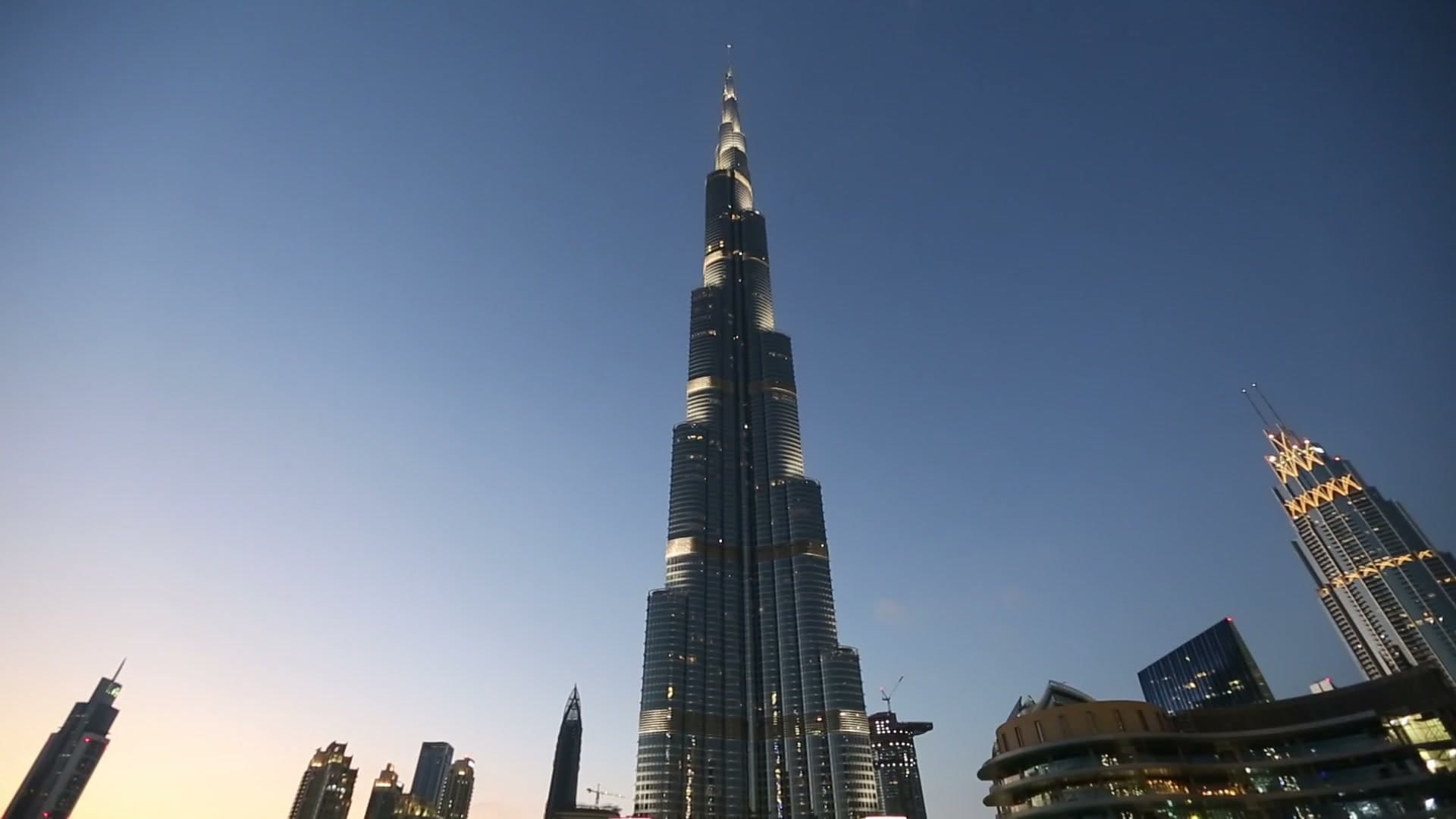
Burj Khalifa included is four different products. At the Top occupies Levels 124 and 125; SKY is the Level 148 deck with its own check-in and a far lower deck density; The Lounge sits on Levels 152, 153 and 154 as a seated, timed food-and-beverage sitting rather than a walk-through deck. On top of that, entry is by timed slot and the prime sunset window is a higher-demand inventory class than a non-prime daytime slot — it sells out first and, for a group, it either gets blocked early or the group is split across times. Ain Dubai works the same way, selling graded tiers from a shared cabin up to a private one, and requiring booking at least 72 hours ahead and no more than 45 days ahead, which rules it out of short-notice programmes altogether. If two quotes both say Burj Khalifa, ask which product and which slot before you conclude anything about either.
Why the same itinerary quotes differently in December and July
Season is not a multiplier applied to a rate. It is a different set of contracts, a different pressure on inventory and — this is the part agents miss — a different product, because a large part of Dubai's outdoor programme does not operate in summer at all. November to March is the peak window, June to August is the deep low, and the shoulders move each year with where the trade calendar and the Islamic calendar happen to fall.
Read December carefully, because it is the month most likely to break a quote you gave a client in September. Four separate demand events stack inside thirty-one days, and GITEX's move out of October into December is new — it lands a very large delegate block on top of the leisure peak rather than in the shoulder where it used to sit. A December programme contracted late is not expensive because somebody marked it up; it is expensive because the inventory a sensible price depended on was committed months earlier.
July and August work the other way, and the trap is assuming the lower number buys the same holiday. Miracle Garden's own opening-time page states it closes from 31 May to 30 September every year and reopens in October. Global Village's Season 30 ended on 10 May 2026 and Season 31 runs October 2026 to May 2027. Balloon flights run October to May on the operator's own FAQ, and the Xclusive Yachts speedboat tour listed by Arabian Adventures is an October-to-April product. A summer quote is lower partly because the itinerary inside it is smaller — indoor, early-morning and evening product, with the desert and the water programme reduced. Compare the inclusion list before you conclude that summer represents value.
One more thing worth knowing when a citywide event lands on your dates: it compresses a district, not the whole city. A programme that will not price in Downtown or around Dubai World Trade Centre during a major exhibition will often re-quote sensibly in a coach-friendly cluster further out, at the cost of transfer time. That trade — minutes on the road against availability — is a decision you should be given rather than have made for you.
What sits on top of the room: taxes and government charges
This is the most common cause of a comparison going wrong, and it has nothing to do with either DMC's contracting. UAE hotel bills carry government and property charges on top of the room, and a quote can legitimately show them inside the number or leave them to be settled by the guest at checkout. Two quotes taking different approaches are not comparable until you normalise them.
The question that follows is usually about the tourist VAT refund, so: it does not help here. The Federal Tax Authority operates a digital refund scheme with Planet for goods a tourist buys and exports — minimum eligible spend AED 250 excluding VAT per transaction, export validation within 90 days of the tax invoice, and departure within six hours of validating, with the original passport and the goods themselves presented at validation. It is a retail-purchase scheme. It does not make a hotel bill or a ground-services invoice refundable, and telling a client otherwise creates a complaint at the airport.
Everything else a quote can quietly exclude
Exclusions are not deceit; they are how quotations work. The failure is not listing them. Run this list against both quotes and the two numbers usually converge.
- UAE entry visas, and the government fees attached to them — separate from the ground services, and separate again from the processing.
- Attraction tickets not named on the line, and upgrades within a named attraction.
- Meals not named, and drinks alongside meals that are.
- Driver waiting time, at-disposal hours beyond the stated block, and any overnight vehicle charge.
- Salik. RTA's own taxi service card states that additional fares apply when passing through Salik gates, so tolls reach the client through the meter or the vehicle bill either way.
- Parking and venue access charges, which for coaches are a real line rather than a rounding error.
- Porterage, gratuities and guide tips.
- Early check-in and late check-out — set per property, never automatic, and worth confirming for any long-haul arrival.
- Travel and medical insurance. Medical insurance valid in the UAE is a stated condition of the Dubai single-entry tourist visa, so this one is not optional cover.
- Anything marked on request, which is a quotation and not a confirmation.
Comparing two DMC quotes without getting it wrong
Work down this before you look at the bottom line. Every item is a place where two quotes can differ while appearing to describe the same trip.
- 01Same dates, including the same check-in and check-out nights — a quote that quietly drops a shoulder night is a different trip.
- 02Same property, or genuinely the same category. Five-star Downtown covers a very wide spread.
- 03Same room types at the same occupancy, priced the same way: per person or per room per night.
- 04Same board basis, written in the same words in both documents.
- 05Taxes and government charges either inside both numbers or outside both — never one of each.
- 06Arrival and departure transfers marked private or shared, with the vehicle class named.
- 07Each excursion marked private or seat-in-coach, with the pickup window stated on the shared ones.
- 08Attraction products named by exact tier and slot, not by landmark.
- 09Guiding stated as none, per excursion, or throughout — with the language named.
- 10What is held against the quote and what is on request, itemised rather than implied.
- 11How long the quote stands, and what happens to the price if held inventory releases before you confirm.
- 12Who answers at 02:00 when a flight diverts, whether that is a named person or a rota, and what the escalation path is.
- 13Whether the partner will approach your client directly. Ask any DMC — including us — to put the answer in writing. It costs nothing to include in a contract and it is the question agents most often forget.
Moving a number without cutting the trip
When a quote lands above where the client sits, the reflex is to ask for a better rate. That rarely works, because the rate is contracted and the specification is not. The specification is where the movement is. Here are nine levers in roughly the order that costs the client least, and the reason each one works is somewhere in the sections above.
- 01Move the dates. A week either side of a citywide event or a public holiday often achieves more than every other lever combined, and the client loses nothing at all.
- 02Change the district before you change the hotel. The same category in a coach-friendly cluster further out will often hold where Downtown will not — you are paying in transfer minutes rather than in standard.
- 03Split the stay. Peak nights where the client actually wants to be, the remainder somewhere quieter, is usually better received than a uniform downgrade across the whole trip.
- 04Move the attraction slot rather than the attraction. A non-prime daytime deck slot is the same view of the same city; the prime sunset window is a higher-demand inventory class.
- 05Change the tier rather than removing the landmark. The standard deck instead of the premium one keeps Burj Khalifa in the itinerary, which is what the client will remember.
- 06Re-examine board basis. Half board in a Downtown hotel whose guests will eat in the mall next door is a line the client pays for twice.
- 07Take shared on the excursion nobody will notice and keep private where it defines the day — usually the arrival transfer and the desert.
- 08Reduce at-disposal vehicle hours to the movements that need them, instead of holding a coach all day for two transfers.
- 09Shorten by a night rather than thinning every day. A shorter trip reads as a decision; a thin one reads as a disappointment.
Then go back with the lever named. Can you do better produces a re-quote against the same specification, which is the same number with a day lost. Can you re-quote with a non-prime deck slot, shared on the city tour and the middle two nights in a coach-friendly cluster produces a different number, usually within the hour, and it produces it against a trip you have already decided you can sell.
Requesting net rates from Forever Journeys
Forever Journeys Tours LLC is a licensed Dubai destination management company, established in 2016, with its head office in Bur Dubai and branches in Gurgaon, Ahmedabad and Kullu. We handle hotels across the Emirates, airport and inter-city transfers, UAE visa processing, excursions and desert product, yacht charter and MICE programmes for agents and operators sending clients into the UAE.
We do not publish rates, for the reasons set out above. Send the specification — dates, passenger numbers with ages, rooming shape, arrival airport, hotel standard or shortlist, board basis, and every excursion marked private or shared — and we will come back with net rates, an itemised statement of what is included and what is not, and a clear separation between what is held and what is on request. Commercial terms — deposit stages, release dates, amendment and cancellation windows — are confirmed per account and per contract rather than published, because they are not the same for every partner. Ask for them in writing at contracting, from us and from anyone else you are comparing. Our contact page reaches the reservations desk directly.
Common questions
- What is a net rate in travel?
- The gross or best-available rate less commission — the price a trade buyer is charged before it adds its own margin for resale. It is a cost line for the agent, not a selling price, and it carries no recommended retail price with it.
- What is the difference between a net rate and a commissionable rate?
- On a commissionable rate the supplier sets the selling price and pays you a fee for selling it, generally after travel. On a net rate you are charged a trade price and decide the selling price yourself, so the difference between the two is your margin — along with the currency movement, the payment timing and the client relationship.
- Why won't a Dubai DMC publish its rates?
- Three reasons. Rates are contracted per agent and per season, so there is no single number to publish. The rate is derived from supplier contracts that carry their own parity obligations, so it is not the DMC's to post publicly. And a rate is a function of a specification — season, occupancy, board basis, transfer type and ticket class all move it — so any published figure would be wrong for almost every enquiry.
- Can I publish a net rate on my own website?
- Establish that per contract rather than assuming it. Suppliers police rate parity on published prices, and a net rate contracted for packaging is not automatically a number you may display as a standalone room price. If you intend to publish, say so at contracting and get the permission in writing.
- Why does the same Dubai itinerary quote differently in December and July?
- Because season is a different set of contracts and a different product, not a multiplier. December 2026 stacks National Day, the Abu Dhabi Grand Prix, GITEX GLOBAL at Expo City, the Dubai Shopping Festival launch and New Year's Eve into one month. July sits in the deep low season, but a large part of the outdoor programme is unavailable — Miracle Garden closes from 31 May to 30 September, Global Village runs an October-to-May season, and balloon flights operate October to May.
- Is VAT included in a Dubai DMC quote?
- It depends on the quote, which is exactly why you have to ask. VAT in the UAE is 5% and applies to hotel, restaurant and retail bills. A quote may show government charges inside the number or leave them for the guest to settle at checkout, and two quotes taking different approaches cannot be compared until you normalise them.
- What is the Tourism Dirham?
- A Dubai fee charged per room per night of occupancy for a maximum of 30 consecutive nights, ranging from AED 7 to AED 20 depending on the property, per the UAE government portal as checked on 29 July 2026. Ras Al Khaimah hotels charge a separate AED 15 per room per night tourism fee. Both are government charges rather than anybody's rate, and both are subject to change.
- Can my client claim the VAT back on their hotel bill?
- No. The Federal Tax Authority's tourist refund scheme covers goods bought and exported, with a minimum eligible spend of AED 250 excluding VAT per transaction, export validation within 90 days and departure within six hours of validating. It is a retail-purchase scheme and does not apply to accommodation or ground services.
- My Dubai quote came back over the client's budget. What should I ask to change?
- Not the rate — that is contracted. Change the specification instead, starting with whatever costs the client least: move the dates around a citywide event, change the district before the hotel category, split the stay so only the peak nights sit in the expensive area, move to a non-prime attraction slot, drop an attraction tier rather than the attraction itself, and reduce at-disposal vehicle hours to the movements that need them. Name the lever when you go back — asking for a better price re-quotes the same specification and returns the same number.
Sources
Checked 29 July 2026. Travel rules, opening hours and event dates change — we confirm current details for every booking.
- ETAG — the A–Z of travel trade jargon
- Visit Wales — travel trade terminology
- Travel Alliance Partnership — travel and tourism terms
- Xotels — allotment, release period and cut-off definitions
- UAE Government Portal — where to stay in the UAE (Tourism Dirham and hotel charges)
- Federal Tax Authority — VAT refunds for tourists
- UAE Government Portal — tax refund for tourists
- GDRFA Dubai — single-entry tourist visa service card (fees stated in addition to 5% VAT; insurance condition)
- RTA — taxi service card (additional fares at Salik gates)
- Burj Khalifa — observation decks (At the Top, SKY and The Lounge)
- Ain Dubai — official site (cabin tiers and advance-booking window)
- Dubai Miracle Garden — opening times and annual closure window
- Global Village — season announcement
- Hero Balloon Flights — operating season
- Arabian Adventures — Xclusive Yachts speedboat tour season
- Arabian Travel Market — official site (2026 dates)
- Dubai World Trade Centre — WETEX 2026 listing
- Big 5 Global — official site (2026 dates)
- Dubai International Boat Show — official site
- GITEX GLOBAL — official site (2026 dates and venue)
- Gulfood — official site (2027 dates and dual-venue edition)
- Formula 1 — 2026 race calendar (Abu Dhabi Grand Prix)
- Dubai Marathon — official site
- Dubai Media Office — Dubai's 2026 retail and festival calendar
- UAE Government Portal — public holidays